


Reading Your Window Sticker: U-Factor, SHGC & What Matters Most in Houston Heat
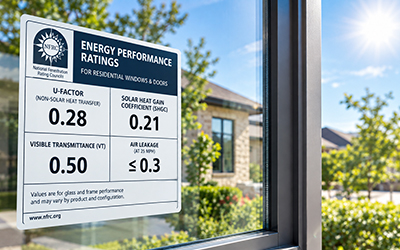 Shopping for replacement windows can quickly turn into a lesson in acronyms and numbers. U-Factor, SHGC, air leakage, visible transmittance — there is a lot of information packed onto a window’s performance label, but what does it actually mean for your home?
For Houston-area homeowners, understanding these ratings is especially important. Our long, hot summers, intense sunshine and high humidity create very different demands than homeowners face in colder parts of the country. A window that performs well in one climate isn’t necessarily the best choice for a home in Southeast Texas.
Two numbers deserve particular attention: U-Factor and Solar Heat Gain Coefficient (SHGC). Understanding what they measure and how they work alongside the window’s glass, frame and installation can help you make a much more informed decision.
What is U-Factor?
U-Factor measures how effectively a window prevents non-solar heat from transferring through the entire window assembly.
In simple terms, it tells you how easily heat can move through the window. U-Factor ratings generally fall somewhere between 0.20 and 1.20 and the lower the number, the better the window is at resisting heat transfer.
This matters year-round.
During the summer, an efficient window helps reduce the amount of outdoor heat transferring into your air-conditioned home. During Houston’s cooler winter days, it helps keep indoor warmth from escaping.
U-Factor is essentially the opposite of insulation performance: the lower the U-Factor, the more resistance the window provides against heat flow.
But while a low U-Factor is valuable, it isn’t the only number Houston homeowners should consider.
What is SHGC?
The Solar Heat Gain Coefficient or SHGC, measures how much solar radiation passes through a window and becomes heat inside your home.
SHGC is expressed as a number between 0 and 1. The lower the number, the less solar heat the window allows inside.
For example, a window with an SHGC of 0.25 allows significantly less solar heat into the home than a window with an SHGC of 0.50.
Think about standing next to a large west-facing window at 4:00 p.m. on a Houston summer afternoon. Even with the air conditioner running, direct sunlight can make that part of the room noticeably warmer. SHGC helps indicate how effectively the window’s glazing system can reduce that solar heat gain.
And in Houston, that can be a major part of window performance.
Why SHGC Matters So Much in Houston
Houston’s cooling season is long, and our homes can experience intense solar exposure for much of the year. That means homeowners aren’t simply trying to keep hot outdoor air from entering the house. They’re also trying to reduce the amount of solar energy coming through the glass and turning into indoor heat.
That’s where SHGC becomes particularly important.
Windows with an appropriate SHGC can help reduce unwanted solar heat gain, particularly in areas of the home receiving significant direct sunlight. This can make rooms more comfortable and reduce some of the cooling demand placed on the HVAC system.
Window orientation matters, too.
South- and west-facing windows can receive substantial solar exposure, while shaded windows or those facing other directions may experience different conditions. The amount of surrounding shade from trees, roof overhangs, neighboring homes and other architectural features can also affect how much solar heat reaches the glass.
That’s one reason there isn’t a single performance number that tells the entire story.
Don’t Choose a Window Based on One Number
It’s easy to look at a window sticker and assume that the product with the lowest U-Factor or SHGC is automatically the best choice.
Window performance is more complicated than that.
A homeowner should consider U-Factor, SHGC, glass configuration, frame construction, air leakage, visible light, window orientation and the home’s specific needs rather than focusing exclusively on one number.
There can also be trade-offs. A very low SHGC may reduce solar heat gain, but homeowners may still want plenty of natural daylight. Different rooms and elevations of a home can have different priorities.
The goal isn’t simply to chase the lowest number on the sticker. It’s to choose a complete window system that makes sense for your home and Houston’s climate.
The Glass Package Makes a Difference
Modern replacement windows can incorporate several technologies designed to improve thermal performance.
Low-emissivity (Low-E) glass coatings are one of the most important. These extremely thin coatings are designed to manage infrared and ultraviolet energy while still allowing visible light through the glass.
Many energy-efficient windows also use double-pane insulated glass units, with a sealed space between the panes. Depending on the window system, gases such as argon may be used between panes to further reduce heat transfer.
The exact glass package matters because two windows that look almost identical can perform very differently.
For Houston homeowners, choosing glass should be about more than appearance. It should account for the amount of sun the home receives, the orientation of the windows, comfort concerns and overall energy performance.
Don’t Forget About the Frame
Glass gets much of the attention when discussing energy-efficient windows, but the frame is part of the thermal envelope, too.
Frame materials differ in how they conduct heat, expand and contract, handle moisture and perform over time. Vinyl, fiberglass, aluminum, wood and thermally improved frame systems each have different characteristics.
The quality of the frame construction also matters.
A high-performance glass package installed inside a poorly designed or poorly constructed frame won’t necessarily deliver the overall performance a homeowner expects. That’s why ratings such as U-Factor evaluate the entire window assembly, not just the center of the glass.
Even a Great Window Can Underperform If It’s Installed Poorly
This may be the most overlooked part of replacement window performance.
You can purchase a window with excellent U-Factor and SHGC ratings, but those numbers won’t compensate for gaps, inadequate sealing, improper flashing or poor installation around the opening.
Houston adds another challenge: moisture.
With heavy rain, humidity, tropical weather and wind-driven storms all part of life along the Gulf Coast, proper water management around a window opening is essential. Installation should create an effective transition between the window and the home’s existing building envelope.
Small installation details can have a big impact on air infiltration, water resistance, comfort and long-term durability.
At Ultra Windows, installation isn’t treated as an afterthought. A replacement window is only as successful as the complete system surrounding it, from the product and glass package to the fit, sealing, flashing and workmanship.
What Should Houston Homeowners Look For?
When comparing replacement windows, start by reviewing the performance label, but don’t stop there.
Ask what the U-Factor and SHGC mean for your specific home. Consider which windows receive the most direct sunlight, whether certain rooms are consistently hotter than others, what type of glass package is being recommended, how the frame performs and how the windows will actually be installed.
A good replacement window decision isn’t about finding the most impressive number on a sticker. It’s about putting all of those factors together.
Choosing Windows for Houston’s Climate
Houston heat puts windows to the test. Between intense sunlight, long cooling seasons, humidity and severe weather, homeowners need more than a window that simply looks good on paper.
U-Factor tells you how well the window resists heat transfer. SHGC tells you how effectively it limits solar heat gain. But glass technology, frame construction, window orientation and installation quality ultimately work together to determine real-world performance.
Ultra Windows has spent decades helping Houston-area homeowners select and install replacement windows with their homes, comfort and local climate in mind. As a locally owned company, we believe the details matter, from helping homeowners understand what they’re buying to making sure each window is installed with the craftsmanship the project deserves.
Locally owned. Locally accountable. At Ultra Windows, our reputation is built one Houston homeowner at a time, not in a corporate boardroom.
Considering replacement windows for your Houston-area home? Contact Ultra Windows to discuss your options and find a window system designed for the way your home actually lives in the Texas heat.